As an Amazon Associate, we may earn commissions from qualifying purchases.
From Its inception to modern day: a look into the M-65
How a jacket designed for troops in Vietnam became a cultural icon, and why it’s a great jacket even for civilians over 60 years later.
Boots on the ground
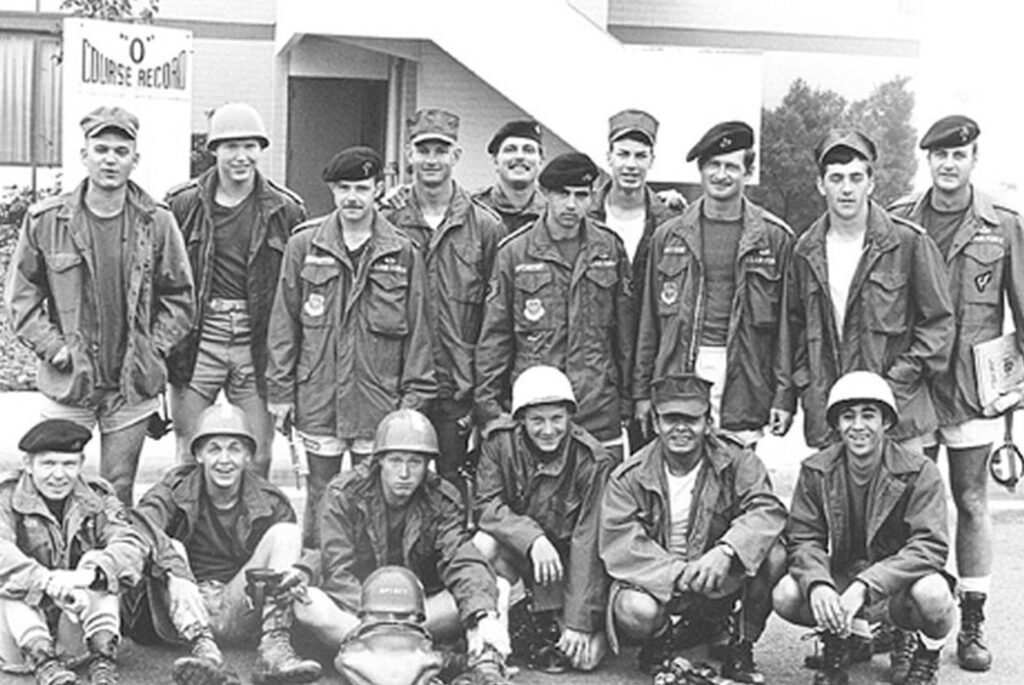
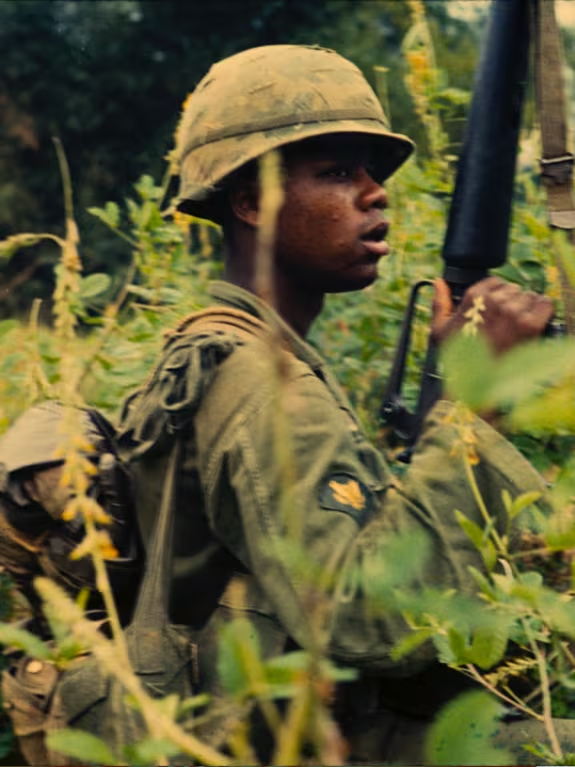
On March 8, 1965, 3,500 U.S. Marines (of the 9th Marine Expeditionary Brigade) landed at Da Nang, Vietnam. Thousands more soon followed. With the treacherous monsoon season only months away (May–November), these new arrivals were issued the M-51 field jacket. The M-51 quickly proved ineffective and inappropriate for this new environment. Designed for the dry, freezing winters of the Korean peninsula, the coat was completely at odds with the miserably wet, mucky conditions of Vietnam’s rainy season.
Constructed of cotton sateen, the jacket was overly absorbent, becoming stiff when wet—limiting movement—and retaining moisture for far too long. The wool-pile liner was also far too hot for the climate. Fiddling with the buttoned sleeve cuffs and optional hood was awkward and slow. That made quick changes with the fluctuating weather difficult. With the war—and the brutal weather—intensifying, the military saw the need to develop a new field jacket that would better serve the troops.
Introducing the M-65 Field Jacket
That same year, 1965, the U.S. military floated the contract for who would take on the design and construction of this new jacket. The job went to Alpha Industries Inc., a company based in Tennessee. Alpha had already worked on several projects for the military, including the N-3B and N-2B parkas for the Air Force, as well as the famous MA-1.
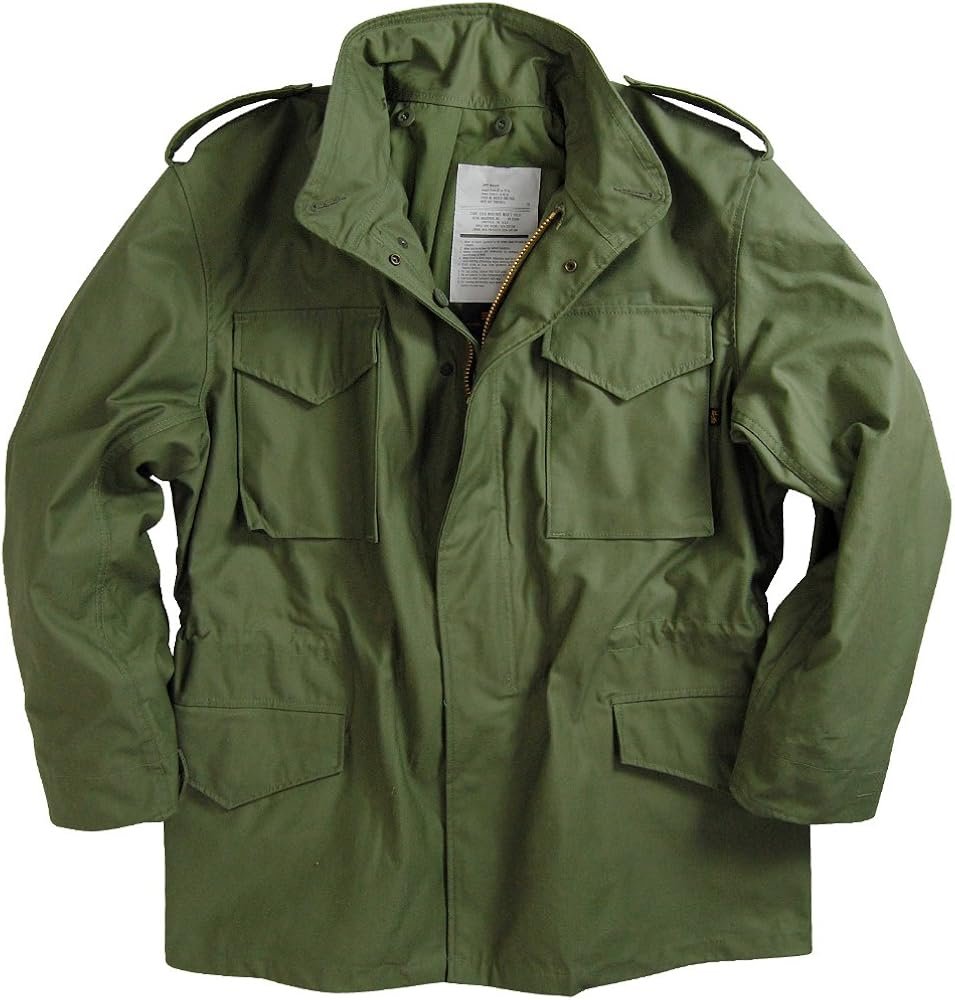
Using the M-51 as the platform to build upon, Alpha Industries got to work. They went down the list of issues, and one by one, they fixed them. First, they changed the shell material—replacing 100% cotton sateen with a more modern blend of nylon and cotton called NYCO, which increased both water and wind resistance. They ditched the removable hood in favor of an integrated hood that could be rolled and stored in the collar, sealed away by a zipper. The storm flap on the front of the jacket received snap buttons to keep out even more wind and water, and the cuff buttons were replaced with Velcro for quicker adjustment and removal.
The cuffs also received storm-cuff extensions: a hidden, spade-shaped piece of material that extends over the top of the hand to deflect water and provide abrasion resistance while moving through brush. The wool, removable liner was swapped out for a ripstop-nylon shell with polyester insulation, which was more durable and dried far quicker. One thing that remained constant about the jacket was how roomy it is—allowing both for layering and for ample space to carry all the kit a soldier would tote around. These refinements came together to create a jacket that aligned with the brutal realities of the new, uncharted battlefield of Vietnam.
The M-65 was found to be effective and-over the years-saw several changes in color to adapt to different environments. Other than that, it received very few changes before finally being retired in 2009. The M-65 lived a long life (44 Years) of military application.
The M-65: Back Home
By the late 1960’s and into the 1970’s, the M-65 had outgrown its military shell, returning home to the states and becoming a symbol of the counterculture. As support for the war cooled down and opposition began heating up, surplus M-65s flooded thrift stores and Army/Navy shops. Young protestors began adopting them as an act of rebellion-wearing the jacket issued to soldiers as a statement against the very conflict it represented. What began simply as a utilitarian garment for soldiers, transformed into a cultural uniform of dissent. The M-65 was cemented as one of the most iconic garments of the era.
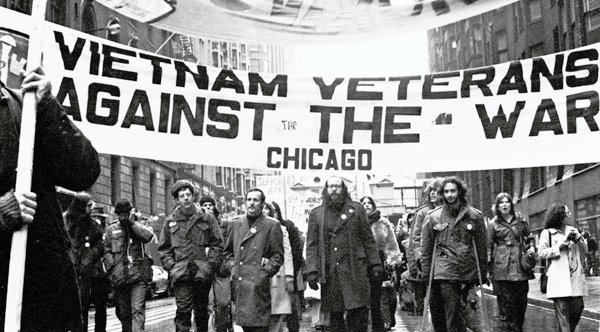
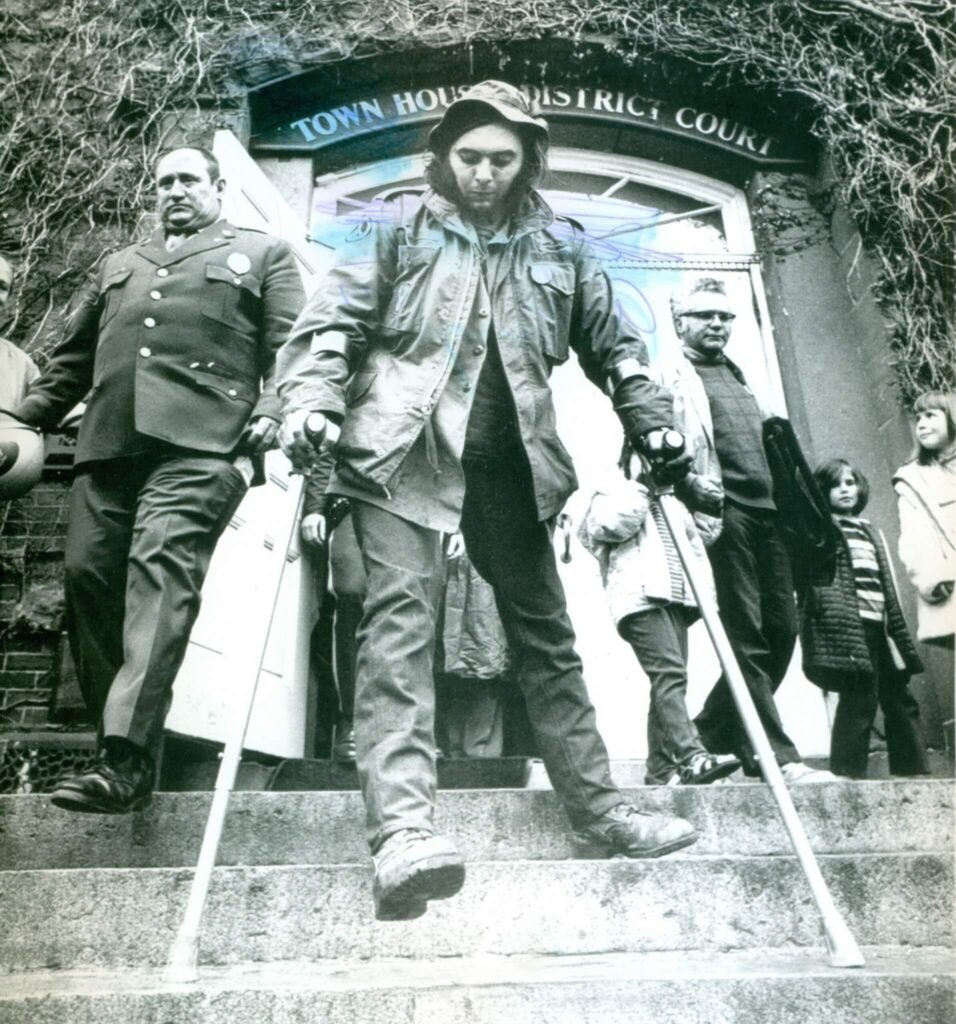
With the jacket becoming such a symbol of what the Vietnam war was, it became a pop-culture legend in film and music, appearing across decades and genres. Worn by Robert De Niro in Taxi Driver and Sylvester Stallone in Rambo, Linda Cardellini in Freaks and Geeks, and Arnold Schwarzenegger in the first Terminator, the M-65 has made its mark throughout Hollywood.
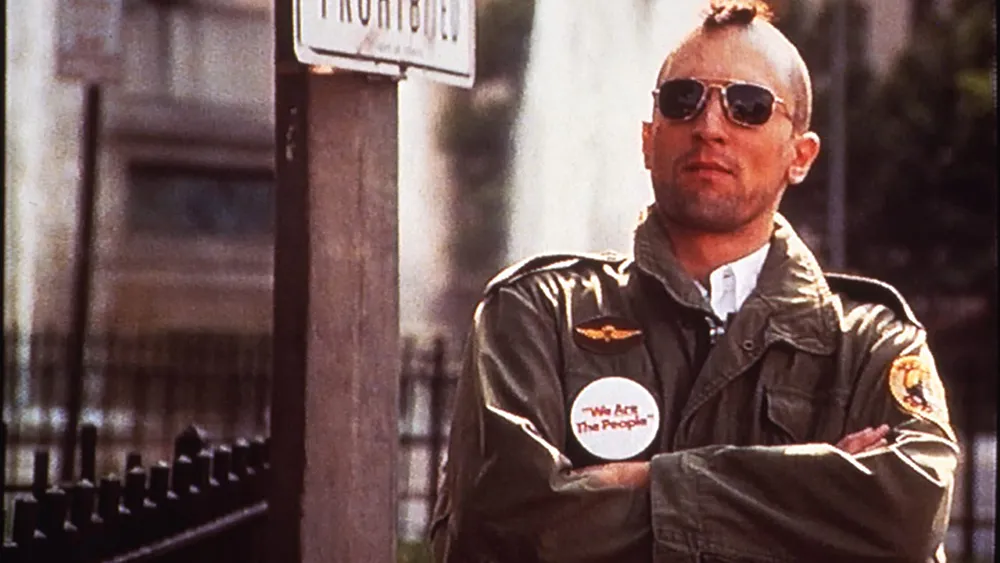
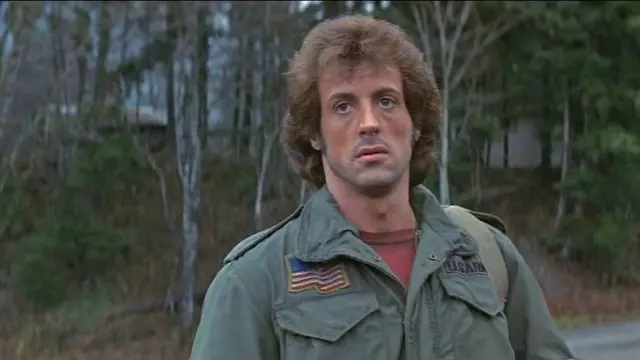
Wearing an M-65 Now
Despite the Vietnam war having come to an end over 50 years ago and being retired from military service over 15 years ago, the functionality of the well-engineered jacket lives on. Alpha Industries is still producing these battle tested jackets for the civilian market -and they’re still making them here in the USA.
My personal experience with the jacket
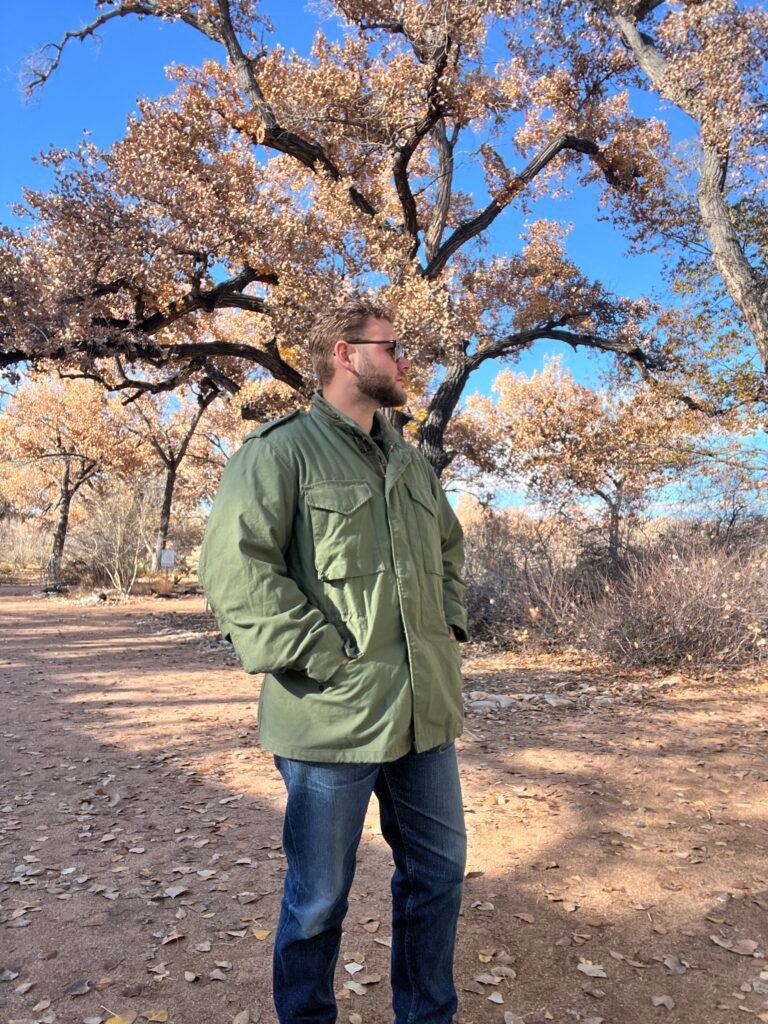
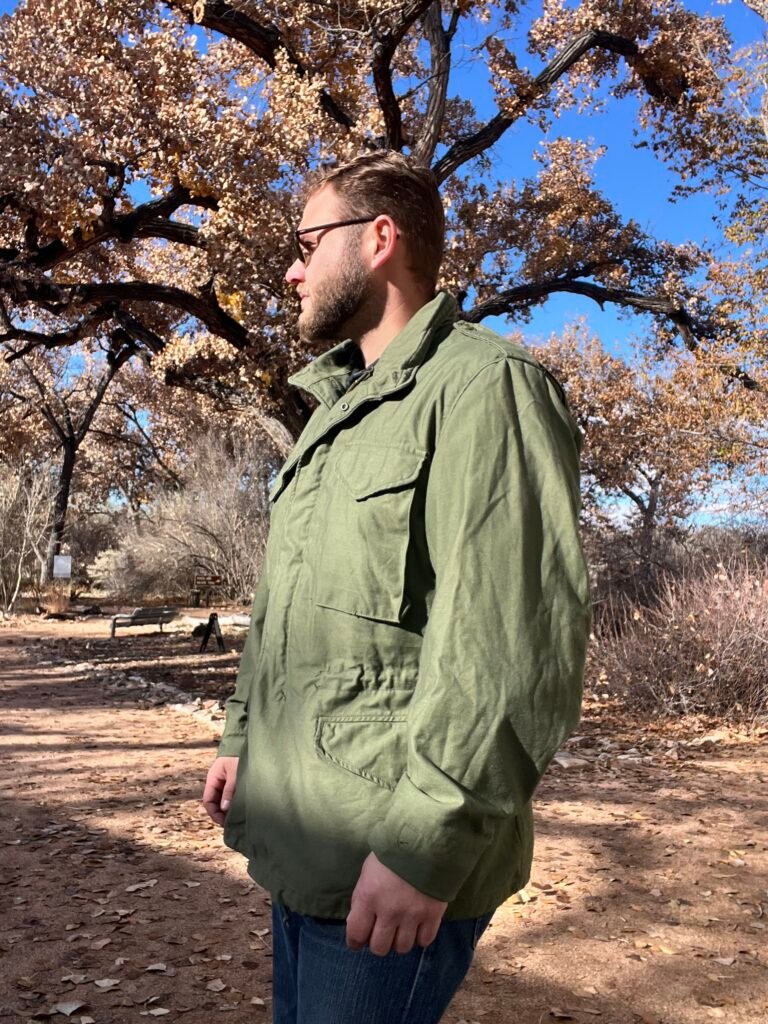
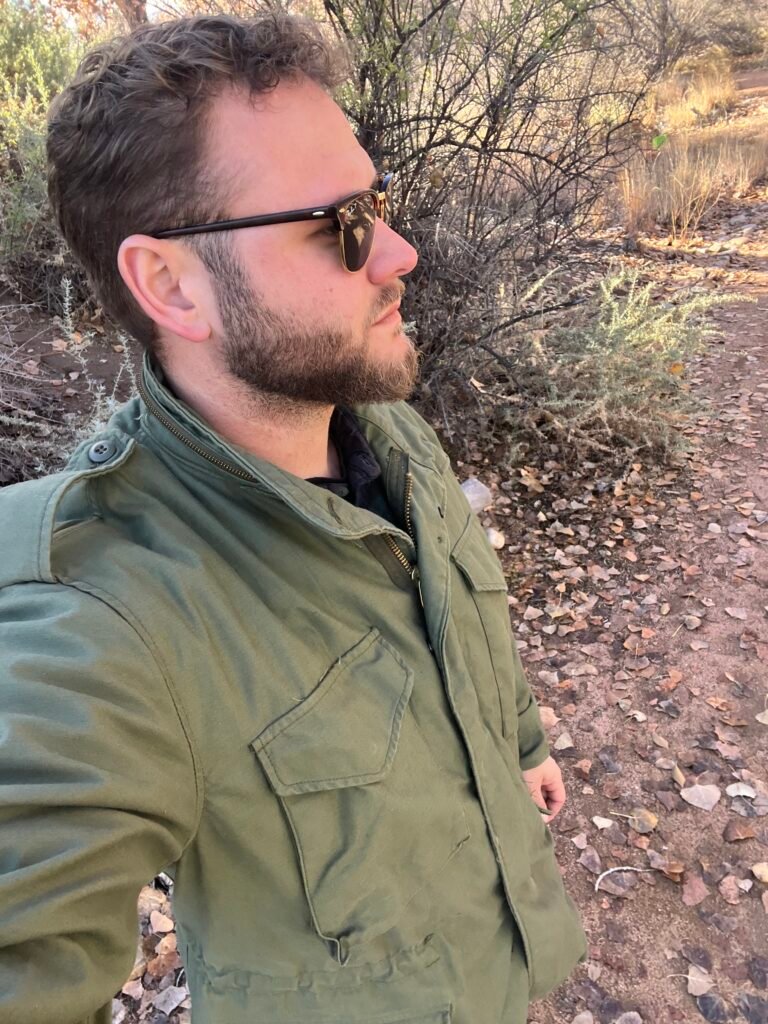
I’m fortunate to own two M-65 jackets: an original (1966–1971, based on the chromed zipper) and a modern Alpha Industries heritage model. I wear them often, as they serve as fantastic intermediary jackets. I live in sunny Southern California, where it’s rarely ever “cold,” and the jacket wears comfortably across several seasons. Whenever I know it’s going to be windy (which it often is) or wet, they come in clutch.
The material holds up extremely well against abrasion when moving through wooded areas and doesn’t snag due to its tight weave. The same can be said of its wind-breaking abilities. It’s an extremely versatile jacket in just how many ways you can wear it: sleeves cinched, flap extended, sleeves rolled up, hood out, zipped all the way, layered heavily underneath—whatever the moment calls for.
One feature I love is that despite the jacket falling to about mid-thigh, the zipper starts at the waist. This means you can have the jacket zipped all the way up and still sit freely. Comfortable if you’re riding a bike, motorcycle, or a horse. For a tightly knit jacket made with half synthetic fibers, it breathes well; you don’t feel like you’re baking in your own heat. The fit runs a little large, which makes layering easy without being cramped.
The pockets are also massive, making it easy to carry everything you need: phone, wallet, keys, knife,battery bank, flashlight, radio, even an iPad Mini. To put the storage size in perspective, you can carry ten cans of beer between the four pockets (don’t ask how I know).
A recent trip
I recently took the jacket with me on a trip to New Mexico this November, bringing my modern Alpha Industries M-65 as my trusted outer layer. We stayed in both Las Cruces and Albuquerque, where daytime temperatures hovered around 75ºF and dropped into the 40s at night.
One afternoon in Albuquerque, we took the Sandia Peak Tramway up into the Sandia Mountains. In just 15 minutes, we went from the calm desert floor to the mountain’s 10,378-foot crest. The summit was snow-capped, the air a biting 30ºF, and the wind cutting hard across the ridge. Yet despite the conditions, I was completely comfortable. I zipped the jacket, buttoned the storm flap, and the cold ceased to matter.
I was struck by just how versatile the M-65 truly is. Standing in the freezing wind, wrapped in a jacket designed half a century ago, I couldn’t help but reflect on the level of thought that went into its creation—and on the men it was originally built for.
If you would like an M-65 for yourself, Here is an affiliate link to Alpha Industries on Amazon. If you make a purchase, we may make a small commission. There is no additional cost to you. It simply supports the work we do here.
I would also recommend sizing down a size. I wear an XL in everything but a Large Regular in my AI/M-65